Minimally Invasive Robotic Knee Replacement – The Truth About Faster Recovery
Ask anyone facing knee surgery what worries them most, and the answer is rarely the operation. It is everything that comes after. How many days in bed? When will I stand? When can I get back to my own life? These are honest questions — and every patient deserves an honest answer, not a marketing line.
That is exactly why more and more families are asking about Minimally Invasive Robotic Knee Replacement at JBCH — and why we believe patients should understand what “faster recovery” truly means before choosing it.
The Simple Meaning of “Minimally Invasive”
The term sounds complicated, but the idea is simple. Instead of a large opening, the surgeon works through a smaller incision and disturbs less of the muscle and tissue surrounding the knee. Less disturbance generally means:
- Less pain in the days after surgery
- Less swelling around the joint
- A more comfortable early healing period
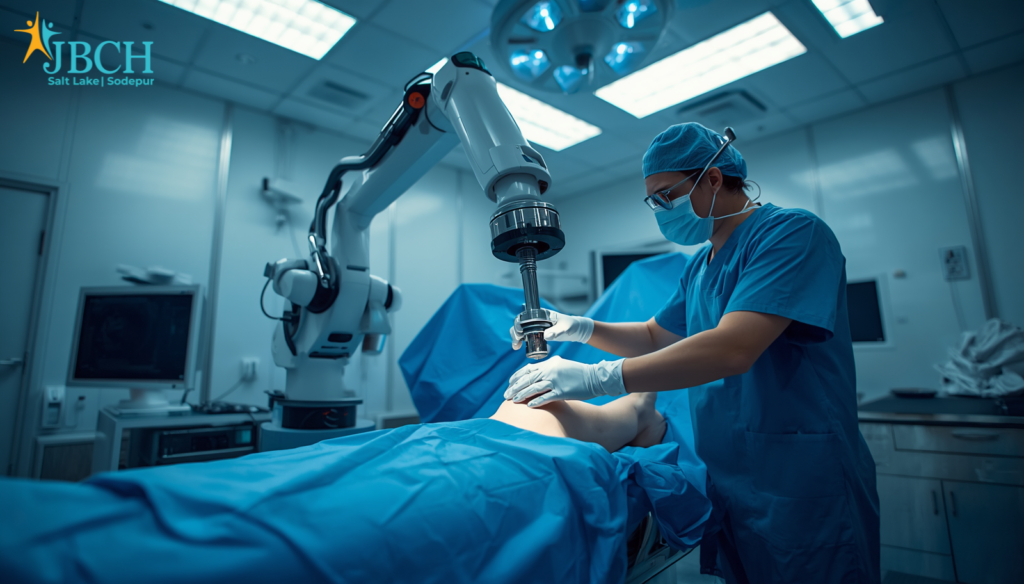
When a robotic system is added to this approach, the surgeon gains an extra layer of precision — helping them work carefully and accurately within that smaller space. The robot does not replace the surgeon; it supports the surgeon’s hands and judgement.
Faster Recovery: What You Can Realistically Expect
Search online and you will find plenty of websites promising lightning-Fast Recovery Knee Replacement Surgery. We prefer to tell our patients the truth.
Recovery happens in stages, and the “faster” part is mostly visible in the early weeks:
- Less pain in the first few days after the operation
- Earlier walking with a walker or support
- A shorter hospital stay in many cases
- A quicker return to simple daily activities like moving around the house
But here is what no honest hospital will hide from you: complete recovery from any knee replacement still takes time. Bone, muscle and tissue need weeks — sometimes months — to heal fully. And the single biggest factor in that journey is not the technology used in the operation theatre. It is the patient’s own commitment to physiotherapy and exercises after going home.
Three Things We Tell Every Knee Patient Honestly
At JBCH, we share these three truths with every patient considering knee replacement:
1. No surgery is a magic solution. The robot improves precision, not patience. Healing follows the body’s own timeline.
2. Your effort matters more than the machine. Regular physiotherapy, doing the prescribed exercises, and following the doctor’s advice at home decide most of your final result.
3. Every patient’s journey is different. Age, body weight, sugar levels, blood pressure and overall fitness all shape how quickly you recover. Comparing your progress with someone else’s is neither fair nor useful.
The JBCH Approach to Knee Replacement Care
At our Salt Lake branch, our goal is to keep the entire journey clear and stress-free — for the patient and the family.
- Before surgery: we explain the procedure, the alternatives and the expected recovery in simple language your family can easily understand.
- After surgery: we guide you through each recovery stage, step by step, including your physiotherapy plan.
- And most importantly: we never push surgery. We recommend it only when it is genuinely the right option for your knee condition.
Your Next Step: An Honest Conversation
If knee pain is limiting your daily life, the first step is not surgery — it is an honest conversation. Visit JBCH for a clear discussion about your knee health, your options, and what recovery would realistically look like for you.
Disclaimer: This blog is for general awareness only. Recovery time and results are different for every patient. Please consult a Qualified Orthopaedic Doctor for proper diagnosis and treatment advice.